Fall armyworms
Caterpillars that arrive in waves, often after late-summer rain, and chew Bermuda and St. Augustine to the stems within days. Quick action limits the damage, and well-watered Bermuda usually grows back.
Diagnosis and treatment for armyworms, white grubs, chinch bugs and other turf insects in St. Augustine, Bermuda and centipede lawns.
Fastest: call (281) 326-6212. Or send this and we call you back.
Lawn pest control in Hawkins targets the insects that brown out East Texas turf: fall armyworms in Bermuda, chinch bugs in sunny St. Augustine and white grubs under all three. Hawkins Pest Control connects you with a licensed local partner who confirms the insect first, prices the visit up front and explains how long to stay off the lawn.
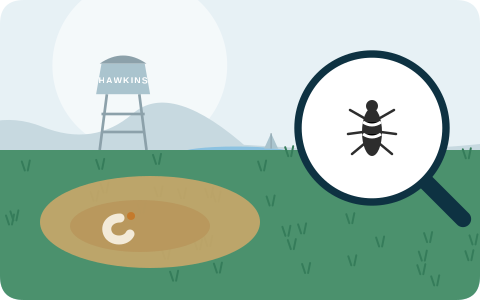
Lawns around Hawkins are a mix of St. Augustine in shady town yards, Bermuda on sunny lots and along pastures, and centipede on the sandy soils common in this part of East Texas. Each grass has its own insect weak spots, and the damage often looks like drought or disease until someone checks the thatch and roots.
That is why a lawn visit starts with diagnosis. Treating a fungus with an insecticide wastes money, and timing matters: armyworms can strip a yard in days, while grubs work slowly underground. Fire ant mounds run on their own schedule; see fire ant control for the Two-Step approach.
Do not stack several store-bought lawn products or put them down just before a storm, because runoff from sandy yards can reach ditches, creeks and ponds. Keep kids and pets off treated turf for as long as the label says, and never use a product on a vegetable garden unless the label allows it.
Lawn insect work is priced per visit and by lawn size. Most outbreaks need one or two targeted visits rather than a standing contract.
| Job | Typical range | What it includes |
|---|---|---|
| Lawn insect treatment (per visit) | $70–$140 | armyworms, grubs or chinch bugs on a typical lot |
| Fire ant yard treatment (typical lot; acreage quoted per acre) | $100–$275 | bait broadcast plus mound treatment |
| Mosquito control (per monthly visit, in season, up to about 1/2 acre) | $60–$110 | for yards that also hold mosquitoes in summer |
Estimates for Wood County lawns in 2026. Large lots and acreage are quoted after a look at the property, and you approve the price before any product goes down.
Caterpillars that arrive in waves, often after late-summer rain, and chew Bermuda and St. Augustine to the stems within days. Quick action limits the damage, and well-watered Bermuda usually grows back.
C-shaped larvae of May and June beetles that feed on roots in summer and early fall. Turf lifts like a loose carpet, and armadillos dig for them. Control is most effective on young grubs.
Tiny sap-sucking bugs in St. Augustine, mostly in hot, full-sun spots next to pavement. Damage starts yellow, turns straw-brown and keeps spreading even with watering.
Sod webworms and ground pearls also show up here. Ground pearls, which hit centipede in sandy soil, have no reliable chemical fix, so the technician will say so and suggest care changes.
Most lawn pest control calls are scheduled the same day, and you approve the price before any work starts.
Look at dawn or dusk along the edge of a browning patch. Fall armyworms are green to brown caterpillars with stripes down the body and a pale, upside-down Y on the head. Birds flocking to one spot, chewed blades and grass that looks scalped overnight are strong clues. Outbreaks often follow late-summer rain.
A soap flush helps confirm it. Stir a couple of tablespoons of dish soap into a gallon of water, pour it over a square foot at the edge of the damage and watch for caterpillars wriggling up within minutes.
Lawns bordering Bermuda hay meadows and pastures on the edges of Hawkins often get hit first, because caterpillars march toward fresh turf once a field is eaten down.
Yellowing St. Augustine beside concrete in summer often points to chinch bugs. Pavement adds heat, the soil dries faster, and chinch bugs thrive in those hot, sunny strips. If the patches keep spreading after watering and small black bugs with white wing marks show up at the edge, insects are the likely cause rather than drought.
A can test confirms it. Push a can with both ends cut out into the turf at the edge of the damage, fill it with water and watch for chinch bugs floating up. Heavy nitrogen and thick thatch tend to make chinch bugs worse.
Treat grubs when you find several per square foot in turf that is already thinning, or when armadillos and skunks keep digging. Preventive products are most effective in early to mid summer, while grubs are small. Large grubs in fall are harder to control, and many lawns tolerate a few without any visible damage.
To check, cut three sides of a one-foot square of sod a couple of inches deep, fold it back and count the grubs in two or three spots. Sandy topsoil makes the job easy, and the turf presses back into place.
St. Augustine is the most insect-prone lawn here, mainly from chinch bugs and grubs. Bermuda handles sun and traffic but is a favorite of fall armyworms. Centipede, common on sandy East Texas soils, has fewer insect problems but suffers from ground pearls and too much fertilizer. Matching care to the grass prevents many outbreaks.
The technician checks the edge of the dead area, not the middle, parting grass for chinch bugs, lifting turf for grubs and looking for caterpillars in the thatch.
Large patch, take-all root rot, drought, dog spots and herbicide injury all mimic insect damage. If insects are not the cause, you are told so rather than sold a treatment.
Contact products fit active armyworm outbreaks, grub control is timed to young larvae, and chinch bug work focuses on hot, sunny edges. You approve the plan and price first.
Some products need watering in, others need to stay dry. The technician tells you which, and how long to keep kids and pets off the grass.
The service report lists the insect found, the product used and any mowing, watering or fertilizer changes that will help the lawn recover.
The sandy topsoil over clay common around Hawkins drains quickly at the surface and holds water lower down. Lawns dry out fast in July and August, which favors chinch bugs, then flush with tender growth after late-summer rains, about when armyworm moths arrive.
Hay meadows, pastures and road ditches full of Bermuda feed armyworms on a large scale, and a lawn next to them sees caterpillars spill over the fence. Where lake lots around Lake Hawkins or golf-course homes at Holly Lake Ranch are kept in irrigated St. Augustine, chinch bugs and grubs top the list.
A growing season of about 246 days in Wood County gives turf insects several generations a year, and armyworms can return in more than one wave before the first frost. The East Texas pest calendar tracks those waves month by month.
Not sure if you're covered? Check your ZIP code.
Two-Step fire ant treatments for town lots, acreage, barns and well houses around Hawkins and southeastern Wood County.
Monthly in-season mosquito treatments for yards near Lake Hawkins, creeks, stock ponds and wooded lots.
Flea control for Hawkins homes with dogs and cats: indoor and shaded-yard treatment timed with your vet's pet care, plus brown dog ticks.
Yard, trail and woods-edge tick treatments for rural tracts, lake lots and pasture borders, with a written report after each visit.
Bermuda and well-rooted St. Augustine usually recover once the caterpillars are stopped, especially with watering and a light feeding. New sod and drought-stressed lawns recover more slowly and may need spots replaced.
Brown rings in St. Augustine during cool, wet spells in spring or fall are often a fungal disease called large patch, also known as brown patch. Insect damage tends to show in hot, dry weather or as chewed blades. The technician checks before recommending anything.
Usually not. Most lawns need treatment only when an insect is found, or when a known problem, like grubs last year, calls for a timed preventive visit. Fire ants and mosquitoes are the exceptions.
That depends on the product label. Many lawn products require people and pets to stay off until the spray dries or the granules are watered in. The technician gives you exact instructions and lists the product on the service report.
This service is built for home lawns and landscaped grounds. Hay fields and grazed pasture fall under agricultural product labels, so ask about them on the call. The Wood County office of Texas A&M AgriLife Extension in Quitman is also a good source on armyworms in forage.