Monthly in-season program
A visit roughly every month from spring through the first hard freeze. It is the standard choice for families who use the yard all summer, and base pricing covers lots up to about half an acre.
Monthly in-season mosquito treatments for yards near Lake Hawkins, creeks, stock ponds and wooded lots.
Fastest: call (281) 326-6212. Or send this and we call you back.
Mosquito control in Hawkins is a monthly yard treatment from spring until the first hard freeze. A licensed local partner treats the shady plants and structures where adult mosquitoes rest and handles standing water that breeds them. It suits lake homes, creek lots and acreage across Wood County, with base pricing for lots up to about half an acre.
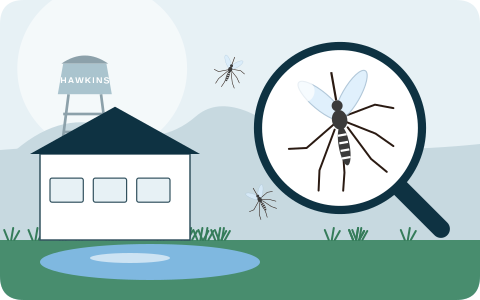
Mosquitoes around Hawkins breed in more places than people expect. Lake Hawkins and its coves get the blame, but the real producers are often closer: a clogged gutter, a boat cover holding rain, a tire behind the barn, a stock pond with weedy edges, or a low spot where the clay keeps water sitting after a storm.
A monthly treatment knocks down the adults resting in your shrubs and deals with water you cannot just dump. It will not empty the woods or the lake of mosquitoes, and nobody honest will tell you it does. What it does is make a back porch, a dock or a kids' play area usable on a June evening.
Do not pour used motor oil, bleach or leftover pesticide into ponds, ditches or the lake to kill wigglers. It harms fish, wildlife and livestock water, and putting products into water against their labels can violate state and federal rules.
Mosquito pricing is per monthly visit in season. The base range covers up to about half an acre; bigger tracts and lakefront lots are priced after a look.
| Job | Typical range | What it includes |
|---|---|---|
| Mosquito control (per monthly visit, in season, up to about 1/2 acre) | $60–$110 | Resting-site treatment plus standing-water check |
| Flea & tick treatment (home + yard) | $150–$325 | Often paired on wooded or brushy lots |
| Fire ant yard treatment (typical lot; acreage quoted per acre) | $100–$275 | Common spring and fall add-on |
| Wasp, hornet or yellowjacket nest removal | $110–$325 | Nests under docks, eaves and porch ceilings |
Estimates for Wood County in 2026. The technician confirms the price for your lot size before the first treatment, and you approve it before anything is sprayed.
A visit roughly every month from spring through the first hard freeze. It is the standard choice for families who use the yard all summer, and base pricing covers lots up to about half an acre.
A single treatment timed shortly before a graduation party, family reunion or wedding on the property. It helps for the event but fades without follow-up visits.
Lots over about half an acre, lake frontage and places with barns or stock ponds are priced after the technician sees them. Treatment usually centers on the house and outdoor living areas, not every acre.
Tell us what's happening and we'll tell you honestly whether it's a quick fix, and what mosquito control should cost.
Mosquitoes around Hawkins are active from spring until the first hard freeze, with the worst weeks usually following heavy rain. Mild winters mean a warm stretch in December can bring a few back out. Most monthly programs here run from spring through fall to match that window, then pause for the cold months.
Wood County gets roughly 43 to 47 inches of rain a year and a growing season of about 246 days. That is a long runway for mosquitoes, and it is why a single spring spray rarely carries a family through July.
Yes, around the house, deck, boathouse walkway and plants on your own lot, following the product label. The lake itself is county-owned public water and is not treated. Because mosquitoes drift in from the coves and the standing timber, lakefront yards often need the full monthly schedule to stay comfortable through summer.
Homes on the county roads around Lake Hawkins also collect rain in boat covers, kayaks and dock buckets. Flip them, cover them or drain them weekly. The lake house pest guide covers the spiders, wasps and rodents that turn up at the same houses.
West Nile virus is carried by mosquitoes across Texas, and human cases have been reported in neighboring Smith County in recent years, including 2023. Texas DSHS posts county-level counts each season, so check there rather than assuming numbers for Wood County. Cutting down bites at dusk and dawn is the practical step either way.
The CDC and DSHS stress the same basics: use an EPA-registered repellent, wear long sleeves at dusk, and dump standing water every week. A yard treatment adds a layer for the hours you spend at home, but it does not replace repellent on a fishing trip or an evening ball game.
Not much. Container breeders such as the day-biting Asian tiger mosquito lay eggs in water no deeper than a bottle cap, and in summer heat larvae can become biting adults in about a week or so. Plant saucers, tarps, toys and tire ruts in the clay all count as breeding sites.
The technician walks the property looking for breeding water and the shady, humid spots where adults rest: under decks, in hedges, along the tree line and behind the AC unit.
Containers that can be emptied are tipped or pointed out. You get a short list of fixes, like clearing a gutter or drilling drain holes in a tire swing.
A labeled product goes on the undersides of leaves, shrubs, fence lines and other shaded spots where mosquitoes sit out the heat of the day.
Where the label allows, a larvicide goes into water that stays put, such as a decorative pond, a clogged drain or a low spot. Lake Hawkins, creeks and other public water are left alone.
Visits repeat about once a month through the season, and each one ends with a written service report of what was treated and where.
Water is everywhere around Hawkins. Little Sandy Creek feeds Lake Hawkins to the northwest, Big Sandy Creek drains the country to the east, and the Sabine River bottoms lie just south of town. Between them sit stock ponds, roadside ditches along the farm roads and wooded draws that stay damp under pine and oak shade.
Soil makes it worse. Sandy topsoil drains fast, but the deep clay underneath holds water, so a yard can look dry on top while low corners stay soggy for days. Those corners, plus tire ruts from trucks and tractors, are where a lot of backyard mosquitoes get their start.
Out on acreage near Fouke or north toward Holly Lake Ranch, treating every acre is rarely practical or worth the money. The better plan is a treated zone around the house, porch, barn door and outdoor living space, plus steady work on standing water.
Not sure if you're covered? Check your ZIP code.
Yard, trail and woods-edge tick treatments for rural tracts, lake lots and pasture borders, with a written report after each visit.
Flea control for Hawkins homes with dogs and cats: indoor and shaded-yard treatment timed with your vet's pet care, plus brown dog ticks.
Two-Step fire ant treatments for town lots, acreage, barns and well houses around Hawkins and southeastern Wood County.
Diagnosis and treatment for armyworms, white grubs, chinch bugs and other turf insects in St. Augustine, Bermuda and centipede lawns.
Most Hawkins homes pay $150–$275 for a one-time inside-and-outside pest treatment, or $85–$140 per visit on a quarterly plan after a $125–$225 first service.
Around Hawkins, termites swarm from late February through May, ticks peak from spring into early summer, and mosquitoes and wasps build through the hot months.
Lake houses around Hawkins deal with mosquitoes from spring to the first hard freeze, spiders and wasps on docks and decks, termites in damp wood near the shoreline and mice in homes that sit empty between weekends.
The technician will tell you based on the product label. Most families are asked to keep kids and pets off treated plants until the spray has dried, so plan the visit for a time when nobody needs the yard for a few hours.
Many mosquito product labels limit spraying on blooming plants that bees are working, so the technician avoids flowering beds, vegetable gardens and fruit trees in bloom. Point those areas out on the first visit so they can be skipped.
Somewhat, since both rest in shady brush, but ticks need their own treatment pattern along trails, tree lines and tall grass edges. If your place backs up to woods or pasture, ask about tick control alongside the mosquito program.
No, as long as the gate is open and dogs are put up. Each visit ends with a written service report. If you keep animals loose, ask on the phone how you will be told before the technician arrives.
They help a little at close range, but they do nothing about the mosquitoes breeding around the yard, and zappers mostly kill other night-flying insects. Dumping water, a porch fan and repellent on skin do more for less money.