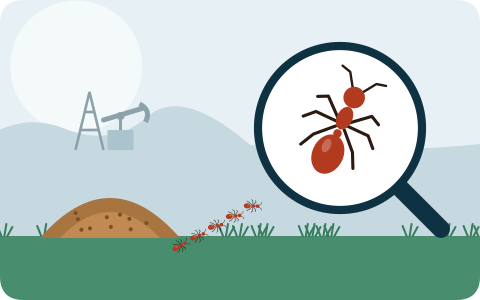
Why do carpenter ants show up in pine and oak around Hawkins?
Carpenter ants follow moisture and soft wood, and the pine and oak around Hawkins supply plenty of both. Dead limbs, hollow stumps, old fence posts and storm-damaged trees hold their main colonies. Workers then move into damp porch posts, leaky window frames or fascia, often traveling along limbs and utility lines that touch the house.
Ice storms and high wind leave broken tops and split trunks in East Texas woods, and those wounds soften with rot. A colony in a damaged oak thirty feet from the porch can send foragers into a damp crawlspace or a bathroom wall with an old leak.
Pier-and-beam houses are especially exposed. Sill plates over a humid crawlspace, rotted skirting on older manufactured homes and porch decking close to the soil all give carpenter ants an easy start.
Should you spray an ant trail in the kitchen?
No. Spraying a trail of odorous house ants kills the workers you can see and leaves the queens untouched, and these colonies respond by budding into new nests. Baits work better because workers carry them home and share them. A store spray near a bait station also drives ants away from the bait, slowing everything down.
Give baits time. Activity often rises for a day or two as more workers find the bait, then falls off over the next week. Wipe up spills but leave the trail alone so it keeps leading back to the colony. If ants return every season, a quarterly pest plan keeps the perimeter treated.
How do you tell carpenter ant damage from termite damage?
Carpenter ant galleries are smooth and clean, almost sanded, and the ants push shavings out of the wood in small piles. Termite galleries are packed with soil and mud, and termites build mud tubes instead of leaving sawdust. Carpenter ants damage wood more slowly, but both point to a moisture problem that needs fixing.
Spring swarmers cause the most mix-ups. Carpenter ant swarmers have a pinched waist, elbowed antennae and front wings longer than the back pair; termite swarmers have a thick waist, straight antennae and four wings of equal length. If you are unsure, bag a few for the technician, or book a termite inspection to rule termites out.
When do fire ants need a separate service?
Fire ants need their own plan when the problem is outdoors: mounds in the lawn, pasture, garden or along the drive and fences. That work follows the Texas A&M AgriLife Two-Step Method, a broadcast bait followed by treating problem mounds. Ant control on this page covers ants nesting in, on or entering the house.
Plenty of homes need both at once. A yard in Hawkins can have fire ant mounds over the septic field and odorous house ants in the kitchen in the same week. Mention each when you call so the visit is priced and planned for everything you are seeing.