Should I choose a liquid termite treatment or a bait system?
Liquid treatment is usually faster and suits most slab and pier-and-beam homes in Hawkins. Bait systems disturb less soil, which helps on lake lots, near private wells or around big gardens, but they take longer to reach the colony and need yearly monitoring. Some homes get both: liquid where termites are active, stations for ongoing watch.
Ask about access before you decide. A liquid barrier needs the technician to reach soil on every side of the foundation, which gets hard where a deck, a carport slab or a thick row of shrubs sits against the house. Bait stations can go around those spots.
When do termites swarm in Hawkins?
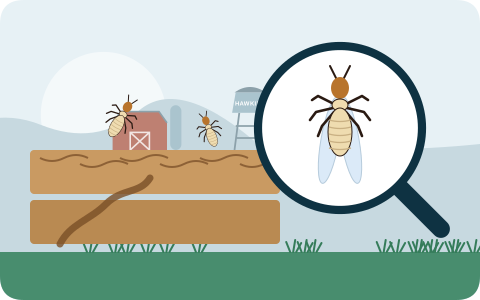
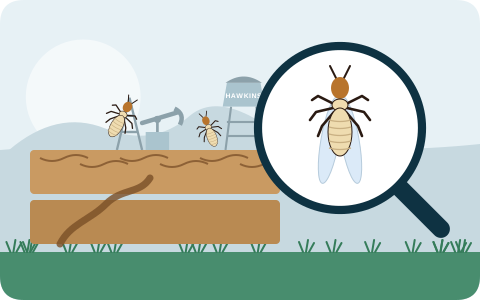
Eastern subterranean termites in Wood County usually swarm on warm days from late February through May, often within a day or two of a good rain. Swarmers inside the house mean a colony is feeding in or under the structure. Swarmers outside, on a stump or fence post, mean a colony is living in the yard.
A swarm is alarming but brief. Winged termites die within hours if they cannot reach soil, and they do not chew wood themselves. Vacuum them up, save a few on a strip of tape for the technician, and call. Flying ants look similar, but termite swarmers have straight antennae, a thick waist and four wings of equal length.
How are pier-and-beam houses treated for termites?
On a pier-and-beam house, the technician crawls under the floor, checks every pier, sill plate and plumbing run for mud tubes, then treats the soil around each pier and along the outside foundation or skirting line. Wood touching soil, leaky pipes and damp crawlspaces get noted, because termites need that moisture to keep feeding.
The termite guide for pier-and-beam homes goes deeper on crawlspace conditions. The short version: keep the crawlspace dry, keep firewood and scrap lumber out of it, and make sure the access opening is clear when the technician comes.