Why do older Big Sandy homes near US 80 get termites?
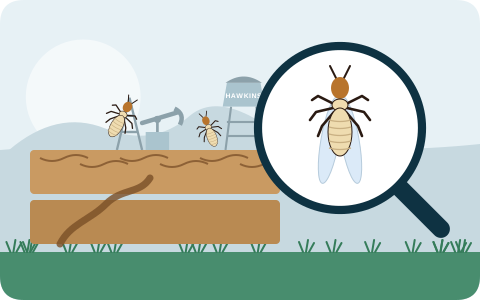
Age, wood and moisture. Older houses near downtown often sit on pier-and-beam foundations with framing close to the ground, and sandy topsoil lets eastern subterranean termites tunnel from a colony to a sill plate without much effort. Swarms usually show up between late February and May, frequently the day after a warm rain.
Watch for mud tubes on piers, floors that feel soft underfoot or small wings piled on a windowsill. Keep firewood and spare lumber off the ground and away from the walls. Termite treatment options differ for a crawlspace house and a slab, and the partner technician explains liquid versus bait before you approve a price.
How do Big Sandy Creek and the Sabine River affect mosquitoes and ticks?
They keep both close to town. The Sabine runs just south of Big Sandy, and Big Sandy Creek, a 58-mile Sabine tributary, gave the town its name. Their wooded bottoms hold water for days after heavy rain, so mosquitoes build quickly, and lone star ticks wait on brush along the deer trails that follow the creek.
Homes on the low side of town and acreage near the bottoms feel it first. Mow a wide strip between the woods and the yard, tip out standing water every week and check dogs and children after time in the brush.
What do Big Sandy businesses along US 80 need?
Mostly steady control of German cockroaches, rodents and ants. Restaurants, stores, churches and offices along US 80 and SH 155 get new insects with every delivery, and mice slip under doors when nights turn cold. A scheduled plan with a written report after each visit helps keep records ready when a health inspector or insurer asks.
Where buildings share a wall, a problem next door can become yours, so sealing and treatment work best when neighbors coordinate. A commercial pest plan is priced per month; Commercial pest plan (per month) estimates run $65–$225, confirmed before service starts.