Town lot or subdivision yard
Bait across the lawn and beds plus mound treatments near the house. This fits most homes in town and in neighborhoods off FM 14 and US 80.
Two-Step fire ant treatments for town lots, acreage, barns and well houses around Hawkins and southeastern Wood County.
Fastest: call (281) 326-6212. Or send this and we call you back.
Fire ant control in Hawkins follows the Texas A&M AgriLife Two-Step Method: broadcast a bait across the whole yard so foragers carry it to the queens, then treat problem mounds near the house, gates or play areas directly. A licensed local partner prices typical lots up front and quotes acreage per acre.
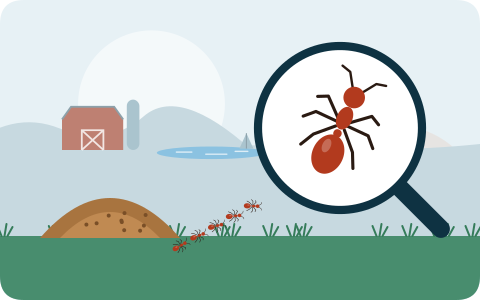
Red imported fire ants are on nearly every property in East Texas, and Hawkins is no exception. Sandy topsoil is easy digging for them, so a good rain in spring or fall raises fresh mounds across lawns, pastures, ball fields and farm road shoulders practically overnight.
Kicking mounds and dousing each one is a losing game, because the colony just moves a few feet over. A yard-wide bait reaches colonies you cannot see, and the mounds that matter most get a direct treatment on top.
The Two-Step Method is the approach Texas A&M AgriLife recommends. Step one: broadcast a fire ant bait over the whole yard or pasture, where foraging ants carry it to the queen. Step two: treat individual mounds that sit in high-traffic spots and need to be gone quickly. Together they reach hidden colonies and urgent mounds.
Bait is slow but thorough. Depending on the product, it can take days to weeks to clear a colony, because workers have to feed it through the nest. Mound treatments act faster but only on the mound they hit, which is why using them alone tends to scatter colonies instead of ending them.
Spring and fall are the strongest treatment windows in Hawkins, when ants forage hard and new mounds appear after rain. Bait performs well on a dry, warm day with no rain in the forecast, because wet bait loses its appeal. Midsummer heat and winter cold can slow foraging, so results take longer then.
On bigger properties, a common plan is one broadcast in spring and another in early fall, with mound treatments as needed between them. The month-by-month pest calendar for East Texas shows how that lines up with mosquito and tick season.
Acreage is treated with a broadcast bait priced per acre, focused on the areas that matter: around the house, barns, pens, gates and hay storage. If cattle, goats or horses graze the land, or it is cut for hay, the technician uses a product whose label allows those sites and explains any waiting periods.
Many owners do not need every acre treated. A bait band around the homestead and working areas, plus mound treatments near water troughs and feed bunks, covers most of the ground people and animals walk. Places up FM 14 toward Pine Mills tend to mix pasture, woods and a homesite, and are priced that way.
Fire ants return because neighboring yards, pastures and road shoulders reinfest any treated lot, and multiple-queen colonies recover quickly from mound-only treatments. In Wood County, a cleared yard usually stays quieter for months, not forever, so most owners plan on baiting again once or twice a year to keep numbers down.
Floods move them too. When a big rain soaks the clay, fire ants can raft on the water and resettle on higher ground, which is often your foundation, a raised bed or a well house.
Do not pour gasoline, diesel or bleach on fire ant mounds. It kills grass and soil life, can contaminate ground near a well, is a fire risk, and usually misses the queen anyway.
The technician checks the lawn, beds, fence lines, electrical equipment, barns and any pasture you want covered, noting mounds near where people, pets or livestock spend time.
A typical lot gets a set price; acreage is quoted per acre. You approve the plan and the price before any bait goes out.
Bait is spread evenly over the treated area when the grass is dry and no rain is expected, so foraging ants pick it up and feed it through the colony.
Mounds by doors, walkways, gates, swing sets or equipment get an individual treatment so those spots clear faster.
You get a written service report, a sense of when to expect results, and advice on when a spring or fall repeat makes sense.
Bait across the lawn and beds plus mound treatments near the house. This fits most homes in town and in neighborhoods off FM 14 and US 80.
Broadcast bait over the area you choose, priced per acre, with mound work around the house, barn and pens. Products are chosen so their labels fit grazed pasture or hay ground if that applies.
Fire ants pack into AC units, well houses, pump controls and electrical boxes, where they can short out contacts. Those spots get careful treatment around the equipment, never a flood of liquid into it.

A typical yard is priced as one job; acreage is figured per acre. Pairing fire ant work with lawn insect visits can make sense on bigger lawns.
| Job | Typical range | What it includes |
|---|---|---|
| Fire ant yard treatment (typical lot; acreage quoted per acre) | $100–$275 | Broadcast bait plus mound treatments |
| Lawn insect treatment (per visit) | $70–$140 | Grass-feeding insects in turf |
| General ant treatment (inside + outside) | $135–$250 | For ants trailing indoors, not just in the yard |
| Quarterly general pest plan (per visit) | $85–$140 | Keeps a fresh band at the foundation between yard treatments |
Ranges are 2026 estimates for Wood County yards. Larger tracts are quoted per acre once the technician has seen the land, and you approve the price first.
If it's an emergency, call now. For non-urgent fire ant control, send the form and we'll call you back.
Sandy surface soil over clay is ideal fire ant ground. The sand is easy to tunnel, the clay below holds moisture through dry spells, and colonies can go deep. After a soaking rain, they push up fresh mounds within a day or two, which is why a lawn can look fine one week and spotted the next.
Around Hawkins, fire ants are more than a lawn problem. They nest in AC pads, irrigation boxes, pump houses for private wells and the base of fence posts on rural tracts. Livestock owners find them around feed areas and water troughs, and hay bales stored on the ground can hide whole colonies.
The Wood County office of Texas A&M AgriLife Extension, at 618 S. Main St. in Quitman, has fire ant publications and can answer questions about the Two-Step Method. Pairing that guidance with lawn pest control covers both the ants and the grass insects that thin out a yard.
Diagnosis and treatment for armyworms, white grubs, chinch bugs and other turf insects in St. Augustine, Bermuda and centipede lawns.
Species-matched ant treatment for carpenter ants in pine and oak, odorous house ants in kitchens and ants nesting in walls.
Monthly in-season mosquito treatments for yards near Lake Hawkins, creeks, stock ponds and wooded lots.
Yard, trail and woods-edge tick treatments for rural tracts, lake lots and pasture borders, with a written report after each visit.
Not sure if you're covered? Check your ZIP code.
On wooded and brushy acreage around Hawkins, lone star ticks do most of the biting, with American dog ticks along grassy edges and roadsides.
It depends on the bait. Some act within days, while others take several weeks because they stop the queen from producing new workers. The technician will tell you what to expect from the product used, and mound activity should drop gradually rather than all at once.
Hold off on watering for as long as the label and technician recommend, since wet bait stops attracting ants. Mowing is usually fine once the ants have had time to pick up the bait; ask during the visit.
Most stings cause a burning welt and a white pustule a day later. Some people are allergic and can react with swelling far from the sting, trouble breathing or dizziness, which needs emergency medical care right away. Keep small children and older relatives away from mounds.
Sometimes, especially after heavy rain or during dry spells when they hunt for water. They trail in through slab cracks, weep holes and gaps around plumbing. A general ant treatment inside and out handles that, along with yard bait to cut off the source.
Yes, but expect some reinvasion along the property line. On rural tracts, a wider bait band along the fence slows that down. Some neighbors split the cost of treating adjoining lots at the same time, which tends to hold results longer.