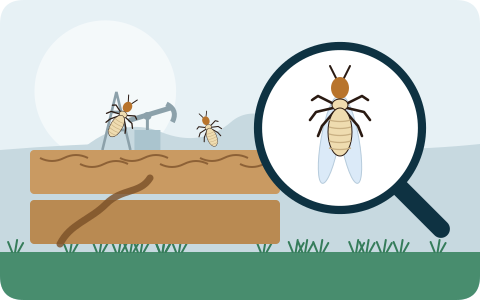
Pier-and-beam houses around Hawkins give eastern subterranean termites an easy route: mud tubes up brick or concrete piers, damp soil in the crawlspace and wood that touches dirt. A yearly crawlspace inspection catches most activity early. Treatment is usually a liquid barrier around the piers and perimeter, or a bait system, priced after the inspection.
Key takeaways
- Eastern subterranean termites are the main termite in Wood County; they live in the soil and build mud tubes to reach wood, which on a pier-and-beam house often means straight up a pier.
- Damp crawlspaces, wood touching soil, leaky plumbing and firewood against the skirting are the conditions that draw termites under older houses.
- A termite inspection costs free to $125; liquid treatment for a typical home runs $1,000–$2,800, and a bait system costs $1,100–$2,400 to install plus $275–$475 a year to monitor.
- Texas real estate deals use the official Wood Destroying Insect Report form prescribed by the Texas Department of Agriculture; around Hawkins, the report typically costs $75–$150.
- Formosan termites are confirmed in nearby Smith and Gregg counties but have not been reported in Wood County.
Why do pier-and-beam houses in East Texas attract termites?
A pier-and-beam house rests its wood framing on piers above the soil, and the crawlspace underneath is often shaded, damp and rarely checked. Eastern subterranean termites live in the ground and need steady moisture, so wet soil under the floor plus wood within reach of the dirt gives them an easy, hidden route in.
Many older frame houses in and around Hawkins were built this way, both in town and out on the county roads. The sandy topsoil here is easy for termites to tunnel through, and the clay a little deeper holds water after a rain, which keeps crawlspace soil moist well after the yard has dried out.
Most of the damage stays hidden. Worker termites eat wood from the inside and avoid open air, so a joist can look normal from below while the core has been hollowed out along the grain.
What signs of termites should you look for in the crawlspace?
Look for pencil-wide mud tubes on piers, foundation walls, plumbing pipes and the underside of the subfloor, plus soft or hollow-sounding sill plates and joists. Inside the house, watch for termite wings on windowsills in spring, bubbling paint, sagging floors and doors that suddenly stick. Any one of these is worth an inspection.
Take a strong flashlight and a screwdriver if you check the crawlspace yourself, and watch for black widows and brown recluse spiders, which like the same dark corners. If going under the house isn't practical, a termite inspection covers the crawlspace and the outside perimeter.
- Mud tubes running up brick, block or concrete piers
- Tubes hanging down from the subfloor or joists without touching the ground
- Wood that sounds hollow or gives under a screwdriver, especially sill plates and joists near the outside walls
- Piles of shed wings near crawlspace vents, windows or light fixtures from late February through May
- Damp soil, standing water or a dripping pipe under the house
- Bubbled paint, buckling floorboards or baseboards that crumble
Where do termites get into a pier-and-beam house?
Termites enter wherever wood meets soil or a hidden path joins the two. Common spots are wood shims on top of piers, porch posts and steps sitting on dirt, wooden skirting, form boards left behind after construction, firewood stacked against the house and the seam where a slab addition meets the original pier-and-beam frame.
Additions deserve a close look. Some older Wood County homes have a bathroom, den or carport added later on a slab, and the seam between the new slab and the original frame hides tubes well. It is easy to miss from both inside and outside.
Skirting is another weak spot. Wood skirting buried in the soil is a direct bridge. Vinyl or metal skirting is better, but soil, mulch or leaves piled against it can hide tubes climbing up behind. Manufactured homes on blocks have the same issue and get inspected much the same way.
How are pier-and-beam houses treated for termites?
Most get either a liquid termiticide barrier or a bait system. For liquid treatment, the technician trenches and treats the soil along the outside foundation and around each interior pier in the crawlspace. Bait stations go into the soil around the house and are checked through the year. The EPA notes that most termiticide work needs a trained professional.
Liquid treatment works quickly and covers the whole footprint, but on a pier-and-beam house it means crawling to every pier, which is why the price can land near the top of its range. Bait systems take longer to knock out a colony and skip treating the soil under the whole house, and they carry a yearly monitoring fee.
Either way, the technician follows the product label for rates and placement, including limits near wells and cisterns, and explains how long to keep pets and kids away from the crawlspace and treated soil. Our termite control page covers what the service includes.
| Service | Typical range | How it applies to a pier-and-beam house |
|---|---|---|
| Termite inspection | Free–$125 | Crawlspace check with a flashlight and probe, plus the outside perimeter |
| Liquid termite treatment (typical home) | $1,000–$2,800 | Soil treated around the perimeter and at each interior pier |
| Termite bait system installation | $1,100–$2,400 | Stations set in the soil around the house |
| Termite bait monitoring (per year) | $275–$475 | Regular station checks and bait changes |
| Wood-destroying insect (WDI) report for a home sale | $75–$150 | Official TDA form for buying or selling |
Can you fix the crawlspace conditions that invite termites?
Yes, and the fixes are mostly about water and wood. Repair plumbing leaks, send gutter downspouts away from the house, keep soil sloping away from the foundation and keep crawlspace vents open. Pull scrap lumber and form boards out from under the house, and keep soil, mulch and firewood off the skirting and siding.
The EPA's homeowner advice on termites lines up with this: keep soil around the foundation dry through grading and drainage, fill cracks in the foundation and around utility lines, and don't store firewood or wood debris against the house.
Some homeowners also cover crawlspace soil with plastic sheeting to hold down humidity. Ask the technician first, because sheeting laid without access in mind can make later inspections and treatment harder.
A drier crawlspace helps with more than termites. It draws fewer cockroaches and spiders, and sealing gaps in the skirting keeps out the rats and mice covered on our rodent control page.
Do Formosan termites matter in Wood County?
Not so far, as far as records show. Texas A&M AgriLife has confirmed Formosan termites in neighboring Smith and Gregg counties, where the Smith County population probably arrived in pine mulch, but they have not been reported from Wood County. In Hawkins, the native eastern subterranean termite is the one doing the damage.
That could change, so be careful with bulk mulch and used lumber hauled in from elsewhere. AgriLife notes that Formosan swarmers tend to fly at dusk and gather around lights, while the native species swarms in daylight. If you see a big swarm around the porch light on a late-spring evening, mention it when you call.
Do you need a WDI report to buy or sell an older house in Texas?
Buyers and lenders often ask for one. In Texas, termite inspection reports for real estate transactions go on the Texas Official Wood Destroying Insect Report, a form prescribed by the Department of Agriculture, and the inspection must be done by someone licensed through its Structural Pest Control Service. Around Hawkins, a WDI report costs $75–$150.
On a pier-and-beam house the inspector needs crawlspace access, so clear the hatch or skirting panel before the appointment. If part of the crawlspace can't be reached, the report will note it, and buyers should read that section closely.
A WDI report records visible evidence and conducive conditions on the day of the inspection. It isn't a promise that nothing is hidden inside a wall, which is why sellers sometimes pair it with records of past treatment.
What should you do if you find mud tubes today?
Leave most of the tube in place and take a photo. You can break open a small section and check back in a few days: if termites rebuild it, the colony is active. Don't spray store-bought products on the tubes or the wood, keep pets out of the crawlspace and book an inspection.
Tubes tell the technician a lot. Their size, where they start and whether they're fresh or dry and crumbly help show how the colony is getting in and how long it has been there. Scraping every tube off before the visit erases that trail.
Write down anything else you've noticed, such as a soft spot in the floor, wings near a vent last spring or a plumbing leak that was fixed a while back. Those details shorten the inspection and make the treatment plan more precise.
What does a technician check during a crawlspace termite inspection?
A thorough crawlspace inspection covers the outside perimeter and skirting, every vent, each pier and its shims, the sill plates, joists and subfloor, plumbing and wiring penetrations, and any slab additions. The technician probes suspect wood, checks soil moisture and notes conditions that invite termites, then explains the findings before quoting any treatment.
Expect the visit to take longer on a pier-and-beam house than on a slab home, because so much of the structure sits in a tight crawlspace. The findings and recommended fixes go into the written service report you keep.
- Outside: skirting, vents, downspouts, grading, mulch depth and any wood touching soil
- Underneath: every pier, shim and sill plate, plus the joists along the outside walls
- Plumbing drops, AC lines and wiring runs where tubes can climb out of sight
- Moisture: wet soil, leaks, sweating ductwork and blocked vents
- Porches, steps and additions where a slab meets the original frame
What happens when you book a termite inspection through Hawkins Pest Control?
Hawkins Pest Control answers 24/7 and connects you with a local technician, usually the nearest one available. The technician checks the crawlspace and perimeter, explains what turned up and gives a price. Treatment starts only after you approve it, and you receive a written service report afterward.
If swarmers are flying inside right now, vacuum them up and skip the store-bought spray; it only scatters the evidence the technician needs to see. Then call (281) 326-6212. Most calls are scheduled the same day when a local technician is available.
Frequently asked questions
How often should a pier-and-beam house get a termite inspection?
Once a year is a sensible habit, ideally in late winter before swarm season. Add a check any time you see wings, mud tubes or soft wood, and after a plumbing leak or standing water under the house.
Can I treat termites myself with a store-bought product?
It's hard to do well under a pier-and-beam house. The EPA notes that most termiticide applications need a trained professional, and a crawlspace job means trenching and treating soil at every pier with the right volume. Spot-spraying the tubes you can see leaves the colony untouched.
Will termites eat pine joists and subfloors?
Yes. Eastern subterranean termites feed readily on softwoods like pine, especially wood softened by moisture. Sill plates and joists near a leak or a wet corner of the crawlspace are often the first to show damage.
Is a manufactured home on blocks treated the same way?
Very much so. The blocks act like piers and the skirting hides the space underneath, so the technician needs a way in to check each block line and the plumbing drops. Treatment is planned around the blocks and the perimeter, and the price reflects how easy the crawl area is to reach.
If swarmers show up inside, is the damage already serious?
Not necessarily. Swarmers mean a mature colony is close by, usually one that has been growing for a few years, but the damage may still be limited. Get an inspection soon so the technician can find the entry point and size up any damage before you plan repairs.
Sources
- Texas A&M AgriLife Extension Urban Entomology – Native subterranean termites
- Texas A&M AgriLife Extension – Formosan Subterranean Termites (E-367)
- U.S. EPA – Termites: How to Identify and Control Them
- Texas Department of Agriculture – Structural Pest Control Consumer Information
- Texas Administrative Code, 4 TAC §7.176 (TDA rule) – Real Estate Transaction Inspection Reports
This guide is general information for Wood County homeowners, not a substitute for an on-site inspection. Prices are estimates. See our disclaimer.