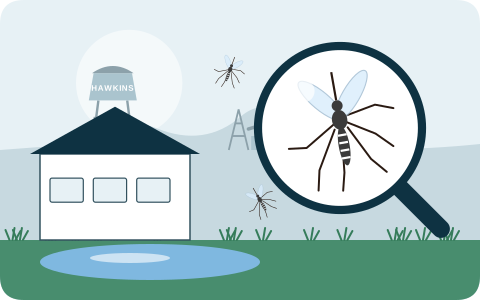
Lake houses around Hawkins deal with mosquitoes from spring to the first hard freeze, spiders and wasps on docks and decks, termites in damp wood near the shoreline and mice in homes that sit empty between weekends. Monthly mosquito visits in season, paired with quarterly perimeter service, handle most lake lots.
Key takeaways
- Lake Hawkins is a county-owned reservoir on Little Sandy Creek, about 3 miles northwest of Hawkins, and the homes along its county roads share the same pressure: water, shade and wood.
- Mosquito visits run $60–$110 a month in season for yards up to about half an acre, and treatment targets the shrubs and shady spots where adults rest, not the lake itself.
- Porch and dock lights draw insects at night, which draws spiders, and wasps build under deck boards, boathouse rafters and eaves from spring to fall.
- Wood decks, stairs and retaining walls that touch damp soil give eastern subterranean termites an easy way in.
- Weekend and seasonal homes invite mice in fall, because nobody is around to notice droppings, chewed packaging or a gap under the garage door.
Why do lake houses around Hawkins see more pests than homes in town?
Water, shade and wood bring pests together at the lake. Shorelines breed mosquitoes, tree cover holds humidity, and decks, docks and boathouses give wasps, spiders and termites places to settle. Many lake homes also sit empty for days at a time, so mice and nesting insects move in before anyone notices.
Lake Hawkins was finished in 1962 on Little Sandy Creek, a Sabine River tributary. Depending on the source, it covers roughly 633 to 776 acres, and its standing timber and wooded banks keep much of the shoreline shaded and damp. Lake homes line county roads such as CR 3420 and CR 3427, and the county park at the dam off CR 3440 draws campers and anglers all season.
North of town, Holly Lake Ranch is a gated, HOA-managed golf and lake community with a 210-acre lake, a 43-acre lake and several smaller ones. Golf course irrigation and shared lake edges add even more water to the picture. Our Lake Hawkins area page covers the shoreline communities in more detail.
How do you cut down mosquitoes on a lakefront lot?
Treat where mosquitoes rest and breed on your own lot, not the lake. A technician applies product to shrubs, under decks and along shady fence lines, and checks for water in boat covers, tarps, gutters and planters. Monthly service in season runs $60–$110 a visit for yards up to about half an acre.
Much of the biting around a lake house often comes from small, still water close by: a sagging boat cover, a canoe left right-side up, a clogged gutter or a low spot that holds rain for a week. The CDC suggests emptying, scrubbing, turning over or covering anything that holds water once a week.
Water you can't dump, such as an ornamental pond or a rain barrel, can be covered with fine mesh or treated with a larvicide used according to its label. Adult mosquitoes spend the day in dark, humid cover, so thick shrubs and the underside of the deck are where a mosquito control visit focuses.
Texas DSHS tracks West Nile virus each season and urges people to wear long sleeves, apply repellent with DEET or picaridin and remove standing water. Those habits still matter on a treated lot, especially on summer evenings down at the dock.
Which spiders and stinging insects show up on docks and decks?
Expect paper wasps under deck rails and eaves, yellowjackets in the ground near steps, carpenter bees in pine and cedar trim, and spiders wherever porch lights pull in night insects. Brown recluse and black widow spiders hide in boathouses, sheds and stacked lumber, and striped bark scorpions climb in from wood piles and pine bark.
Lights are a big part of it. A dock light that burns all night draws midges and moths off the water, and spiders build right where the meal lands. Switching to yellow bug lights, or turning dock lights off when nobody is outside, usually cuts down the web cleanup.
Wasp nests are priced by size and reach, and nest removal runs $110–$325. Never knock down a nest from a ladder or a boat; a fall into the water with a swarm overhead is a bad combination. Wasp and bee removal handles nests under docks and high eaves.
Spider or scorpion treatment costs $135–$275, and carpenter bee treatment runs $125–$275 per home. Carpenter bees prefer bare or weathered softwood, so painting or staining fascia and deck rails makes them less interested.
Are termites a bigger risk for a house near the water?
Often, yes. Eastern subterranean termites need moisture, and lake lots have plenty of it: damp soil near the shoreline, deck posts set in dirt, wooden retaining walls and crawlspaces that stay humid. A yearly inspection catches most activity early. Inspections run free to $125, and treatment is quoted afterward.
Check anything wooden that touches the ground: deck posts, stair stringers, landscape timbers, a woodpile under the deck and the boathouse frame. Mud tubes on concrete footings or a soft spot in a deck board are worth a call.
Termiticide labels set rules for how close some products can go to water and wells, so the technician reads the label against your lot before choosing between a liquid barrier and a bait system. That's one reason a waterfront quote can differ from a similar home in town. Our termite control page explains both options.
Formosan termites, confirmed in Smith and Gregg counties, have not been reported in Wood County, so the native species is the one to watch on Lake Hawkins and Holly Lake Ranch lots.
How do you keep mice out of a weekend lake house?
Seal the house before fall, take food home and set traps someone checks. Mice slip in through gaps around plumbing, AC lines and garage doors once cold fronts arrive, and an empty house gives them weeks to settle in. Rodent trapping plus entry-point sealing runs $275–$1,100, depending on the house.
Pantry staples, birdseed, dog food and fish food all draw mice to a lake house, and boat cushions make good nesting material. Store dry food in glass or metal, take open bags home and keep seed and feed in sealed bins.
Roof rats are climbers. Limbs touching the roof and vines on the siding give them a path to the attic, so trim trees back several feet from the eaves. Snap traps along the walls of the garage and utility room will show whether rodents are active between your visits.
How do you handle fire ants on a lawn that runs down to the water?
Lean on bait rather than heavy mound drenches near the shoreline, and keep treatment back from the water's edge as the label directs. Fire ant yard treatment runs $100–$275 for a typical lot. Mounds pop up on lake lawns after soaking rains, often along retaining walls, septic drain fields and the sunny strip above the bank.
Texas A&M AgriLife Extension's Two-Step Method suits a lake lot well: a light broadcast of bait across the yard, then direct treatment only for mounds by the steps, the dock path or the fire pit. Worker ants carry the bait back to the colony, so it works over weeks rather than overnight.
Keep bait off wet ground and out of the water, and hold off if rain is coming in the next day. Kids and dogs running down to the dock are the usual victims of a hidden mound, so the strip along the path to the water deserves the closest look.
What should you do when you close up or open the lake house?
A short checklist at each trip keeps small problems from growing while the house sits empty. Before you leave, remove food, empty the trash and stop water from collecting. When you come back, look for droppings, mud tubes, new nests and dead insects at the windows, and book service if any show up.
- Closing up: take home open food and pet food, empty the trash and leave cabinet doors under the sinks open so droppings are easy to spot later
- Turn canoes and kayaks over, tighten boat covers so they can't pool water, and empty buckets and planters
- Close fireplace dampers and check door sweeps and weather stripping
- Opening up: check counters, drawers and the garage for droppings or chewed packaging
- Look under the deck and eaves for new wasp nests before the grandkids head outside
- In spring, check deck footings and the crawlspace for mud tubes and the windowsills for termite wings
What does pest control for a lake house cost?
Most lake homes combine a quarterly general pest plan at $85–$140 a visit, after a $125–$225 first service, with monthly mosquito visits at $60–$110 in season. Wasp, spider, carpenter bee and rodent work is priced separately when needed. Every figure is an estimate for Wood County, confirmed and approved before treatment.
Exterior work can often be done while you're away, as long as gates are open, pets are inside and the technician knows which areas to cover. At Holly Lake Ranch, mention the gate when you call so access can be arranged ahead of time.
| Service | Typical range | Why lake homes need it |
|---|---|---|
| Initial service to start a quarterly plan | $125–$225 | Clears out what built up while the house sat empty |
| Quarterly general pest plan (per visit) | $85–$140 | Keeps spiders, ants and roaches off the deck and out of the house |
| Mosquito control (per monthly visit, in season, up to about 1/2 acre) | $60–$110 | Shoreline, shade and boat covers keep mosquitoes coming |
| Wasp, hornet or yellowjacket nest removal | $110–$325 | Nests under docks, deck rails and boathouse rafters |
| Spider or scorpion treatment | $135–$275 | Dock lights draw insects, and spiders follow |
| Carpenter bee treatment (per home) | $125–$275 | Bare pine and cedar trim, decks and docks |
| Rodent control: trapping + entry-point sealing | $275–$1,100 | Empty houses invite mice in fall |
| Termite inspection | Free–$125 | Damp soil and wood decks near the water |
Do Holly Lake Ranch homes and Lake Hawkins places need different plans?
The pests match, but the setting changes the plan. Holly Lake Ranch homes sit inside a gate around shared lakes and a golf course, so the focus stays on mosquitoes, ants and stinging insects near the house. Lake Hawkins places along county roads often add pasture, barns or shops, which brings in ticks, fire ants and rodents.
In an HOA community, check whether the association has rules about contractors at the gate or work near common areas, and share them with the technician. Treatment stays on your own lot either way.
Out on the open county-road properties, a lake house often doubles as a weekend farm. Fire ant bait on the pasture, a flea and tick treatment around the dog pen and rodent work in the feed room can matter as much as anything near the water.
Frequently asked questions
Can the lake itself be sprayed for mosquitoes?
No. Lake Hawkins is a county-owned reservoir, and the lakes at Holly Lake Ranch are shared community water, so treatment stays on your lot. The technician works the shrubs, deck undersides and standing water around your house, where adult mosquitoes rest close to you.
Do I have to be at the lake house for a visit?
Not always. Exterior service, such as mosquito, wasp and perimeter work, can often be done while you're away if gates are unlocked and pets are inside. Interior work needs someone to let the technician in, so many owners book it for the start of a weekend stay.
Why do I find piles of dead insects when I open the house?
Wasps, flies and lady beetles crawl into wall voids and attics to wait out cold weather, then follow light to the windows on warm days and die there. Vacuum them up, seal gaps around window frames and soffits, and ask about a perimeter treatment in early fall.
Is a dock or boathouse part of the service?
It can be. Wasp nests under the dock, spider webs in the boathouse and carpenter bees in the rafters are common requests. Mention the dock when you call so the technician can plan the time and check product labels for work near water.
Do you handle snakes or armadillos at the lake?
No. Snakes, armadillos and other wildlife fall outside pest control service, and a wildlife control specialist is the right call for those. Cutting tall grass, clearing brush piles and keeping rodents down near the house does make a lake lot less inviting to snakes.
Sources
- CDC – Mosquito Control at Home
- Texas Department of State Health Services – West Nile Virus
- Texas A&M AgriLife Extension, Field Guide to Texas Insects – Striped bark scorpion
- U.S. EPA – Termites: How to Identify and Control Them
- Texas A&M AgriLife Extension, Texas Imported Fire Ant Research and Management Project – Two-Step Method
This guide is general information for Wood County homeowners, not a substitute for an on-site inspection. Prices are estimates. See our disclaimer.