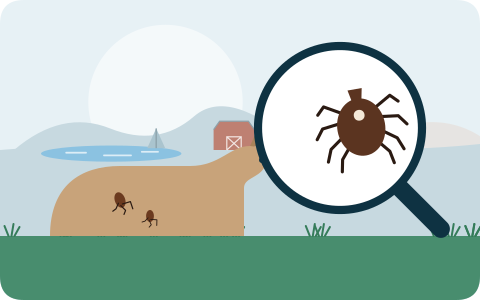
On wooded and brushy acreage around Hawkins, lone star ticks do most of the biting, with American dog ticks along grassy edges and roadsides. Ticks peak from spring into early summer but bite in any warm spell. Mowing, clearing brush near the house, protecting pets and targeted yard treatment cut how many you bring home.
Key takeaways
- Lone star ticks are the most common biters in brushy, wooded East Texas land, while American dog ticks gather along grassy edges, paths and road shoulders.
- Tick season peaks from spring into early summer; lone star nymphs come in waves from April to June and July to August, and adult black-legged ticks are active in fall and winter.
- Ticks here can carry ehrlichiosis, Rocky Mountain spotted fever and, rarely, Lyme disease, and the CDC links lone star tick bites to alpha-gal syndrome.
- Nobody can treat 40 acres of woods, so treatment targets the zones people and pets use: the yard, kennel, trails and the edge where lawn meets brush.
- Flea & tick treatment (home + yard) runs about $150–$325 around Hawkins; bigger tracts are quoted after a walk-through.
- For time in the field, the CDC recommends EPA-registered repellent, permethrin-treated clothing and boots, and a shower and full tick check after coming in.
Which ticks are you likely to find on land around Hawkins?
Three species matter most. The lone star tick is the common biter in brushy woods and the one most people find crawling up their legs. The American dog tick gathers along grassy paths, fence lines and road edges. The black-legged tick, which AgriLife considers the main Lyme disease carrier in Texas, is present here too.
Adult female lone star ticks are reddish-brown with a single pale spot in the middle of the back that can look white, cream, gold or bronze. The larvae, which many East Texans call seed ticks, cluster by the hundreds and can leave dozens of bites after one walk through the wrong patch of brush.
| Tick | Where you'll find it | When it's most active | Health concerns |
|---|---|---|---|
| Lone star tick | Brushy woods, shady leaf litter, deer trails and the edge where pasture meets timber | Spring into summer; nymphs April–June and again July–August | Ehrlichiosis and STARI; linked by the CDC to alpha-gal syndrome |
| American dog tick | Tall grass along paths, fence lines, pasture edges and road ditches | Spring and early summer | Rocky Mountain spotted fever |
| Black-legged tick | Humid woods with deep leaf litter | Adults in fall and winter; young ticks in spring and summer | Lyme disease, which is rare in Texas |
When are ticks worst on East Texas land?
Spring into early summer is peak tick season around Hawkins, with a second wave of lone star nymphs in July and August. Ticks don't vanish in winter, though. A run of warm January days can bring them out, and adult black-legged ticks are active in fall and winter, which overlaps deer season.
Texas DSHS notes that ticks are most active in the warmer months of spring and summer. Here that stretch runs long, because Wood County gets roughly 43–47 inches of rain a year and mild winters. Humid shade under pine and oak keeps ticks from drying out between meals.
On many Wood County properties, the first lone star ticks turn up on warm March days, and numbers often ease when late-summer heat dries out the grass. Plan heavy outdoor work with that in mind. Clearing fence lines or cutting brush during a cool, dry spell in late fall means far fewer lone star ticks than doing the same job in May.
Where do ticks concentrate on a rural property?
Ticks wait where animals travel and shade holds moisture. On acreage around Hawkins, that means the edge where lawn or pasture meets timber, fence rows, deer trails, brushy creek bottoms, tall grass in county road ditches and the ground around feeders, deer stands and dog pens. Open, mowed, sunny ground holds far fewer.
Deer carry plenty of adult lone star ticks, so a corn feeder near the house pulls ticks toward the yard. Rabbits, rodents and stray dogs spread them around too. Moving feeders well away from the house and barn is one of the cheapest changes a landowner can make.
Land along Little Sandy Creek, Big Sandy Creek and the Sabine bottoms stays damp and shady, and the pine country along FM 14 toward Pine Mills has plenty of thick understory. Yaupon and other dense brush hold humidity at ground level, so open, cleared woods usually carry fewer ticks than a thicket.
How do you cut ticks around the house and barn?
Build a clear, dry buffer between the woods and the places people use. The CDC recommends removing leaf litter, clearing tall grass and brush around homes and placing a 3-foot strip of wood chips or gravel between lawn and woods. Keep grass mowed, and keep rodents, which feed young ticks, out of barns and sheds.
None of this wipes ticks out, but it shrinks their habitat right where your family spends its time, and it makes any treatment last longer.
- Mow the yard, barn lot and kennel area short, and shred a wide strip along fence lines near the house
- Rake leaf litter out from under shrubs and porches
- Lay a 3-foot strip of gravel or wood chips where the lawn meets the woods
- Stack firewood neatly, off the ground and away from where kids play
- Put swing sets, picnic tables and dog runs in sunny, open ground away from the tree line
- Keep feed in metal cans so rodents don't move into the barn
Just bought land near Hawkins? Where should tick control start?
Start with a walk around the house, barn and kennel to find where lawn meets brush, then clear and mow that zone first. Move feeders away from the house, open up the fence rows you use most and schedule yard treatment in early spring, before nymphs peak in April. Habitat work first makes any treatment last longer.
Land that sat idle for a few years usually comes with thick edges, brush piles and tall grass right up to the porch. Clearing that buffer is one of the most useful changes you can make, and it helps with snakes, rodents and fire ants at the same time.
Ask the previous owner or the neighbors where deer cross and where cattle bed down, since ticks gather in those spots. Then mark the paths your family will walk every day, such as the route to the mailbox, the barn and the pond, and keep them mowed short all summer.
If the place includes a manufactured home or an older house on piers, check under it as well. Rodents nesting in a crawlspace feed young ticks, and stray animals often bed down in the same shade.
Does yard treatment kill ticks on acreage?
It does when it targets the right ground. A technician treats the zones people and pets use: the yard, the edge of the tree line, dog pens, kennel runs and the path to the barn. Spraying an entire wooded tract isn't practical or affordable. Flea & tick treatment (home + yard) runs about $150–$325.
On a tick control visit, the technician walks the property, points out the hot spots and treats lawn edges, shady beds and animal areas according to the product label. If the dogs are bringing ticks indoors, flea and tick control covers the house as well.
Livestock change the plan. Product labels set rules for use around horses and cattle and for grazing after treatment, so tell the technician which animals use each pasture. You'll also get clear instructions on how long to keep pets, kids and animals off treated ground.
Bigger tracts are priced after a walk-through. Fire ant work, often done at the same time on pasture, is quoted per acre through fire ant control.
How do you protect yourself, kids and dogs in the field?
Dress for it and check afterward. The CDC recommends EPA-registered repellent such as DEET, picaridin or IR3535, plus clothing and boots treated with 0.5% permethrin. After coming in, shower within two hours, check your whole body and tumble-dry work clothes on high heat for 10 minutes. Ask your vet about tick prevention for dogs.
Ticks like warm, tight spots: behind the knees, along the waistband, under the arms, at the hairline and behind the ears. Kids need someone else to check them, and dogs should be checked around the ears, collar, legs and between the toes after every trip into the brush.
Pull an attached tick straight out with fine-tipped tweezers, gripping it close to the skin, then clean the bite. Skip the old tricks with a hot match or nail polish, which only delay getting it off.
Hunters and ranch hands can tuck pant legs into boots and wear light colors, so crawling ticks are easier to spot before they settle in.
When should you see a doctor after a tick bite?
Call a doctor if fever, chills, headache, body aches or a rash show up in the weeks after a bite. Texas DSHS lists ehrlichiosis, spotted fever rickettsiosis, Lyme disease and other tick-borne illnesses, and early treatment matters. Tell the doctor about the bite and where you were, because the symptoms can look like flu.
Ehrlichiosis, spread mainly by the lone star tick, usually starts suddenly with fever, chills and headache, often around 12 days after the bite, according to DSHS. Rocky Mountain spotted fever can become serious quickly without treatment, which is why a fever after a tick bite deserves a prompt visit.
The CDC also links lone star tick bites to alpha-gal syndrome, an allergy to red meat and other mammal products. If you start reacting to beef or pork hours after eating it, mention any recent tick bites to your doctor.
This guide is general information, not medical advice. If you saved the tick in a sealed bag, bring it along, since knowing the species can help.
What happens on a tick treatment visit?
After you call, Hawkins Pest Control connects you with a local technician, usually the nearest one available. The technician walks the property with you, marks the tick zones, explains the products and the price, and treats only after you approve. You get a written report of what was applied and where.
Expect questions about pets, livestock, wells, gardens and where the kids play, because those answers decide which products fit and where they go. The technician will also tell you how long to stay off treated areas.
Ticks drift back in from surrounding woods and wildlife, so many acreage owners repeat treatment during peak season alongside the habitat work above. For a price on your place, call (281) 326-6212; most calls are scheduled the same day when a local technician is available.
Frequently asked questions
Can ticks survive an East Texas winter?
Yes. They ride out cold snaps in leaf litter and on animals, and adult black-legged ticks stay active through fall and winter. Even a hard freeze only slows them down until the next warm spell.
Do I need to treat the whole property?
No. Treat the ground people and animals use: the yard, the barn lot, dog pens and the paths between them, plus the edge where grass meets the trees. Open pasture in full sun holds few ticks, and deep woods respond better to brush clearing than to spraying.
Will a yard treatment bother my horses or cattle?
Labels set the rules for treating near livestock, including how long animals must stay off treated ground. Tell the technician which pastures and pens your animals use so the products and areas can be matched to them, then keep the animals off for as long as the label requires.
Is Lyme disease a real risk around Hawkins?
It's possible but rare. Black-legged ticks, the main Lyme carrier, are present in eastern Texas, and Texas DSHS tracks Lyme cases. Lone star and American dog ticks, which carry ehrlichiosis and spotted fever, are more common here, so any fever after a bite deserves a doctor's attention.
Should the vet or the pest technician handle ticks on my dogs?
Both, for different jobs. Your vet handles tick prevention on the dog itself. The pest technician treats the yard, kennel and house, where ticks drop off and wait for the next host.
Sources
- Texas A&M AgriLife, The Tick App for Texas – Lone star tick
- CDC – Preventing Tick Bites
- Texas Department of State Health Services – Tick-borne Diseases
- Texas Department of State Health Services – Ehrlichiosis
- CDC – About Alpha-gal Syndrome
This guide is general information for Wood County homeowners, not a substitute for an on-site inspection. Prices are estimates. See our disclaimer.